After completing my Master of Fine Arts, I spent many years working full-time as a designer, constantly in front of screens and digital systems. Eventually, I began longing for something slower, tactile, and physically grounded. In 2014, I started learning ceramics as a way to reconnect with making by hand, something that had always been instinctive to me since childhood. I joined TACA in 2023 to feel more connected with Australia’s ceramics community and to be part of its exciting conversations.
QUESTION 1. What are you currently exploring or curious about in ceramics, and where do you see your work heading next?
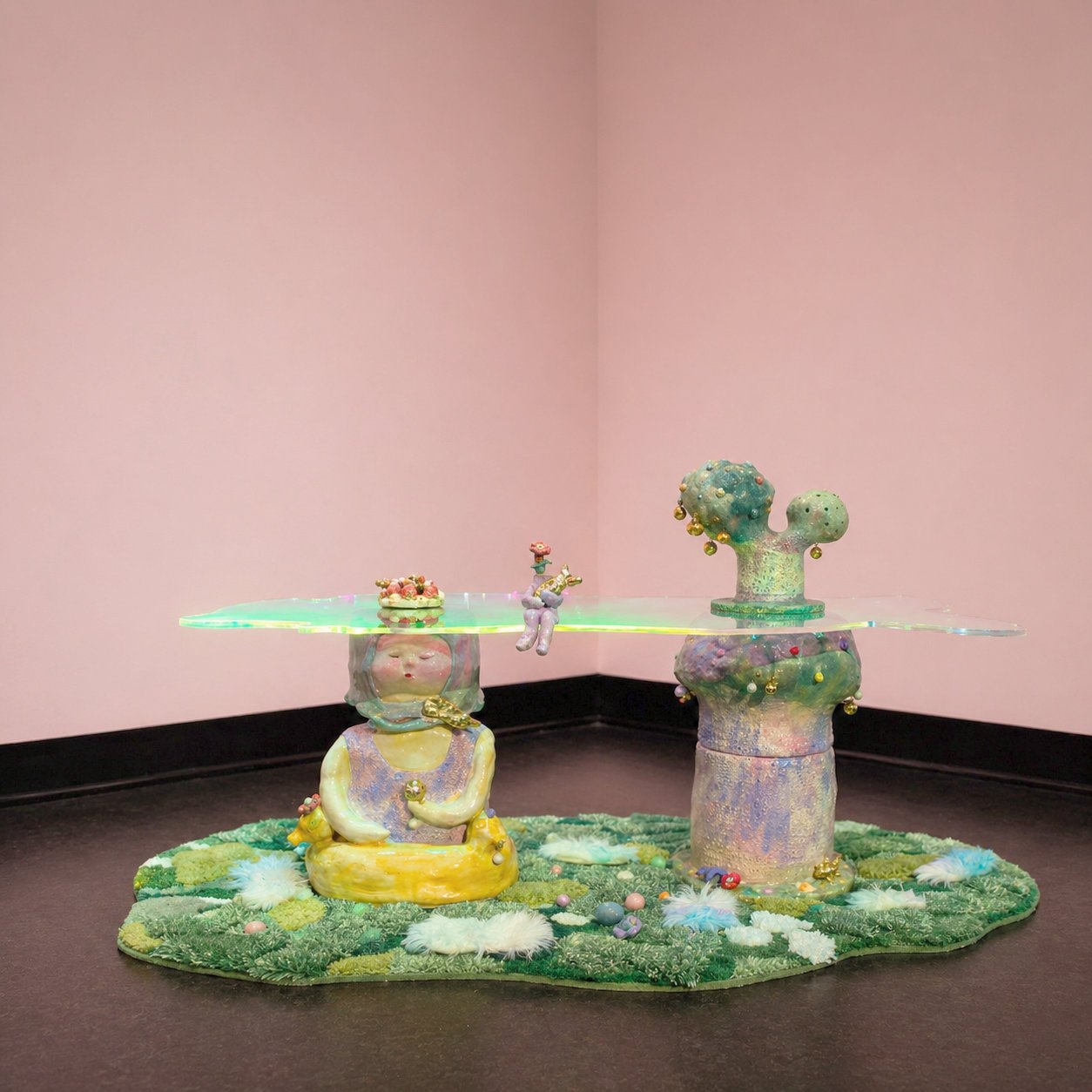
Currently, I am obsessed with creating sculptural ceramic furniture that sits between functional interior design and storytelling sculpture. I keep pushing my work further through texture, scale, quirky ideas, and emotionally layered narratives inspired by childhood memories, cultural objects, and strange everyday encounters. Looking ahead, I dream of creating large-scale ceramic sculptures for public art and immersive installations that people can physically walk around, unexpectedly encounter, and emotionally connect with. I love the idea of clay existing beyond gallery spaces and becoming part of everyday public life in surprising and joyful ways.
QUESTION 2. What first drew you to working with clay, and how has your relationship with the material evolved over time?
What first drew me to clay was the desire to reconnect with making things by hand after years of working digitally as a designer. Clay immediately felt alive to me because it records touch, movement, mistakes, and time in such a human way. My relationship with ceramics has continued to evolve through residencies at Shigaraki Ceramic Cultural Park, Japan and Taoxichuan Art Center, Jingdezhen, China where I was surrounded by deep ceramic histories and communities devoted to the material. While I deeply respect technical knowledge and traditional ceramic processes, I feel most connected to clay as a storytelling material that carries memory, emotion, humour, and traces of human presence. I enjoy allowing intuition, texture, and unpredictability to guide the work, often embracing cracks, imperfections, and unexpected firing results as part of the narrative itself.
QUESTION 3. Name an inspiration behind your work. Who or what has influenced your work over the years?
A lot of my inspiration comes from observing the world around me, especially while travelling, encountering new cultures, listening to people’s stories, and noticing small emotional details in everyday life. Memories from my childhood in Indonesia, tropical botanical forms, family traditions, and playful imagination continue to shape my work. I am also inspired by multidisciplinary artists such as Jaime Hayon, whose practice moves fluidly across design, painting, sculpture, and interiors with humour and bold storytelling. The dreamlike narratives of Marcel Dzama and the imaginative world-building of Henry Darger also resonate deeply with me.
QUESTION 4. Love a sneaky peek! Walk us through your studio, what kind of kilns do you have, and what would we see?
My ceramic studio takes over the front room of the house, so I have become slightly obsessed with organisation and cleaning to keep dust under control. Shelves packed with sculptures, drying works, glazes, and labelled containers surround the space, while portable table, stool, and four-level wheeled rack filled with underglazes help everything stay mobile and within easy reach. You would spot abandoned pottery wheels in the corner because of my back pain, an IKEA wall board covered with test tiles and sketches, a slab roller on a folding table, and two electric kilns in the outdoor backyard shed: a trusty top-loader from the Covid years and a larger front-loader recently adopted from a fellow ceramicist.
QUESTION 5. What excites you about ceramics in Australia?
What excites me about ceramics in Australia is how fearless and expansive the field has become. Ceramics is no longer confined to functional ware or traditional expectations. Artists are using clay for installation, performance, storytelling, social commentary, and experimental material research. I love seeing practices shaped by so many different cultural backgrounds and personal histories. There is also a strong sense of generosity within the community, where artists genuinely support each other through workshops, exhibitions, residencies, and conversations.